

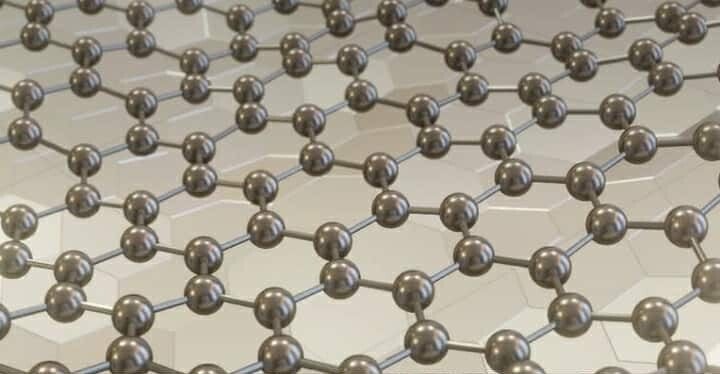
Welcome to the future of additive lubrication.
Growing climate change, resource depletion, and fossil-fuel dependence mean these breakthrough materials provide a path to innovation and global renewal. Oil-driven technology in a new era characterised by efficiency, renewability, and ecological resilience represents new engineering ideas in an unprecedented opportunity to reimagine the world's industrial architecture in energy, transportation, manufacturing, electronics, construction, and environmental remediation.
Nanoscale materials combine the efficiency of natural systems with the scalability of modern science, making them the first truly viable instruments for advancing mankind beyond the fossil fuel era. However, the capacity to produce high-quality graphene in large quantities will determine whether or not the market flourishes.

Explore Graphene-based products.
Graphene and nanoparticles stand at the forefront of a technological revolution poised to redefine the foundations of modern industry. The need to minimise worldwide reliance on petrochemicals and fossil fuel-derived lubricants is environmentally important. Extending a lubricant's lifespan is essential to improve longevity and lifespan, power, performance and reliability of the engine.
Industry could lose millions of dollars due to equipment downtime caused by an outdated or dried-out lubricant. Using the incorrect additive can really lead to a number of issues with your engine's l. Graphene is more than just a material; it is also a platform that, when combined with nanoparticles, opens up completely new engineering possibilities. Graphite, graphene, and nanoplatelets have different properties and can produce a range of results.
The One-Atom Revolution.
As the globe faces an increasingly unstable climate and the limitations of petroleum-based systems, nano-enabled materials represent not only a scientific advance but also a planetary need. They lay out a vision for a worldwide industrial renaissance that combines economic growth with environmental responsibility and alters humanity's relationship with energy and matter.
Nonetheless, these challenges are surmountable. Manufacturing costs have steadily declined, and advances in chemical vapour deposition and biomass-derived graphene indicate rapid industrial maturity. The fossil fuel era defined the last century. Graphene and nanoparticles may define the next.


Engineering the Post-Petroleum World,
For almost a century, fossil fuels have propelled global industry, boosted economic progress, and influenced almost every facet of modern life. However, this development has come at a shocking cost: destabilised climatic systems, widespread pollution, extraction-based geopolitics, and an accumulation of plastic and chemical waste that now contaminates oceans, soils, and even human bloodstreams (Geyer, Jambeck, & Law, 2017).
As nations confront the repercussions of industrialization's excesses, the limitations of oil-based technologies become increasingly apparent. Graphene and nanoparticles can transform global industry, mitigate the environmental damage caused by petroleum dependence, and catalyze a cleaner, more resilient technological future.
"Graphene Lubricant has been a game-changer! Their products are top-notch, and their customer service is second to none. Highly recommend!"
Aussie Customer